Annapurna Circuit Trek
The classic circuit of the Annapurna massif — from subtropical valleys to the world's highest pass trail.
Price
Contact us for pricing
Kathmandu-direct pricing — no middleman markup.
The Annapurna Circuit is one of the world's great long treks. It circles the entire Annapurna massif, ascending from the lowland rice paddies of Besisahar through ever-changing landscapes — pine forests, Tibetan-style villages, the dramatic Manang valley — to the crossing of Thorong La (5,416 m), descent to sacred Muktinath, and a finish via the beautiful Poon Hill ridge above Ghorepani. Few treks pass through such variety in a single journey: subtropical farmland, the world's deepest gorge, high desert, and a Himalayan pass on the same trail. It suits fit walkers seeking a serious but non-technical challenge, with a built-in acclimatisation day at Manang. Our route favours the original footpaths over the newer jeep road wherever possible, and every departure is private to your group — guided by an experienced Nepali team that has walked this circuit for decades, in the tradition TempleFront has kept since 1996.
Group Trips
Upcoming Group Departures
Reserve your spot — no payment upfront
Itinerary
Day-by-Day Itinerary
Arrive Kathmandu (1,350 m)
▲ 1,350 m
Overnight: Kathmandu
Drive Kathmandu → Besisahar (760 m); trek begins
▲ 760 m
A long drive west to the gateway town of Besisahar in the Marsyangdi valley. Trek or jeep start.
Overnight: Besisahar
Trek Besisahar → Bahundanda (1,310 m)
▲ 1,310 m
First trail day through rice terraces and Gurung villages along the Marsyangdi river.
Overnight: Bahundanda
Trek Bahundanda → Chamje (1,410 m)
▲ 1,410 m
A day deeper into the Marsyangdi valley, crossing the river on a high suspension bridge to the stone village of Chamje beneath sheer cliffs and ribbon waterfalls. 5–6 hrs.
Overnight: Chamje
Trek Chamje → Dharapani (1,960 m)
▲ 1,960 m
The valley narrows into a spectacular gorge with waterfalls and suspension bridges.
Overnight: Dharapani
Trek Dharapani → Chame (2,710 m)
▲ 2,710 m
Pine forests and the first views of the Annapurna summits above the valley.
Overnight: Chame
Trek Chame → Pisang (3,300 m)
▲ 3,300 m
Dramatic cliffs and the great curved rock face above Pisang announce the Tibetan plateau landscape ahead.
Overnight: Pisang
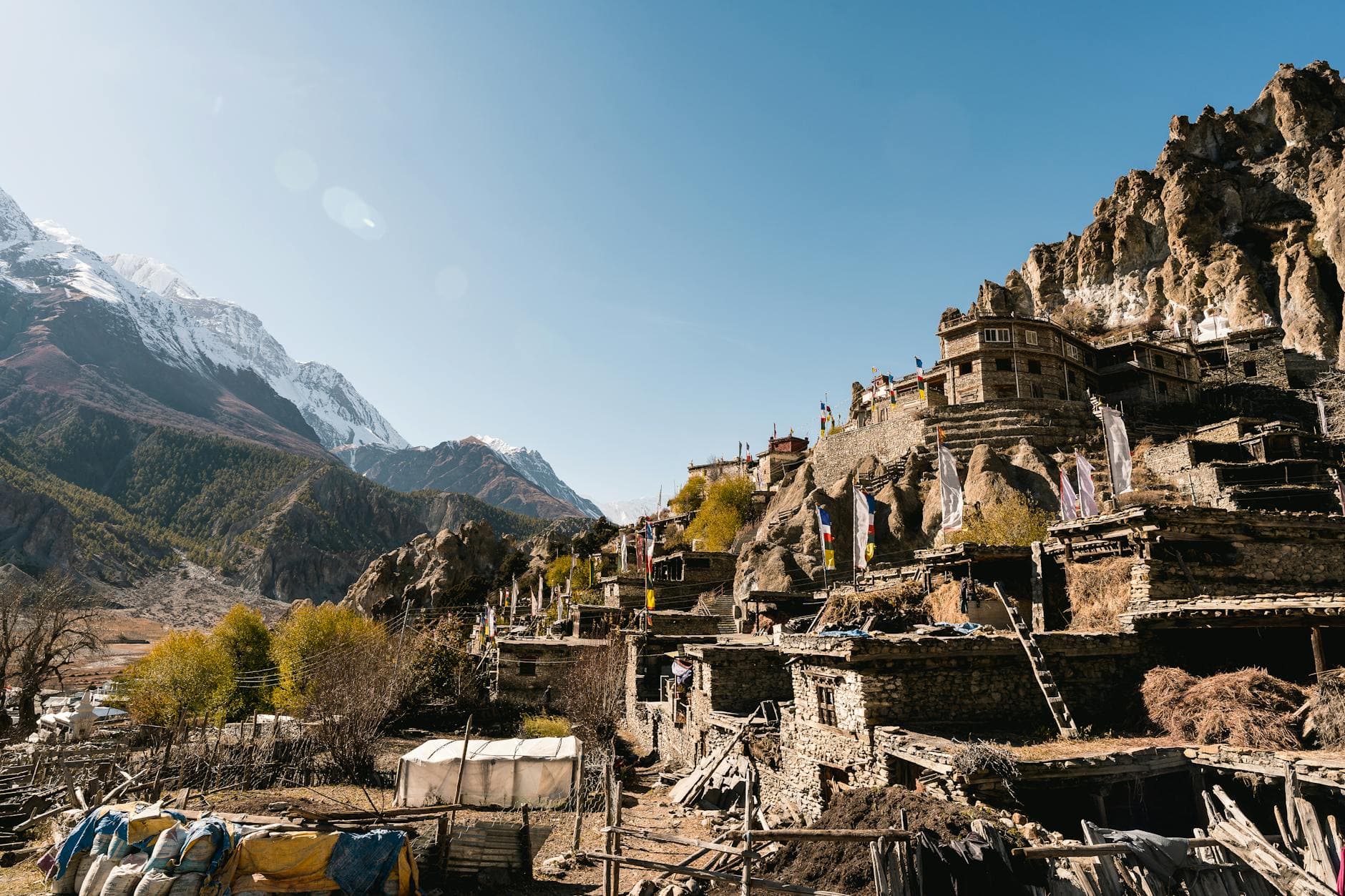
Trek Pisang → Manang (3,540 m)
▲ 3,540 m
Into the wide, arid Manang valley — a Tibetan-Buddhist world of flat-roofed houses, mani walls, and yak caravans.
Overnight: Manang
Acclimatization in Manang (3,540 m)
▲ 3,540 m
A rest and acclimatization day. Walk to the Ice Lake (4,600 m) or a viewpoint above Gangapurna Lake.
Overnight: Manang
Trek Manang → Yak Kharka (4,110 m)
▲ 4,110 m
A gradual climb above the treeline into high alpine meadows used as summer pasture.
Overnight: Yak Kharka
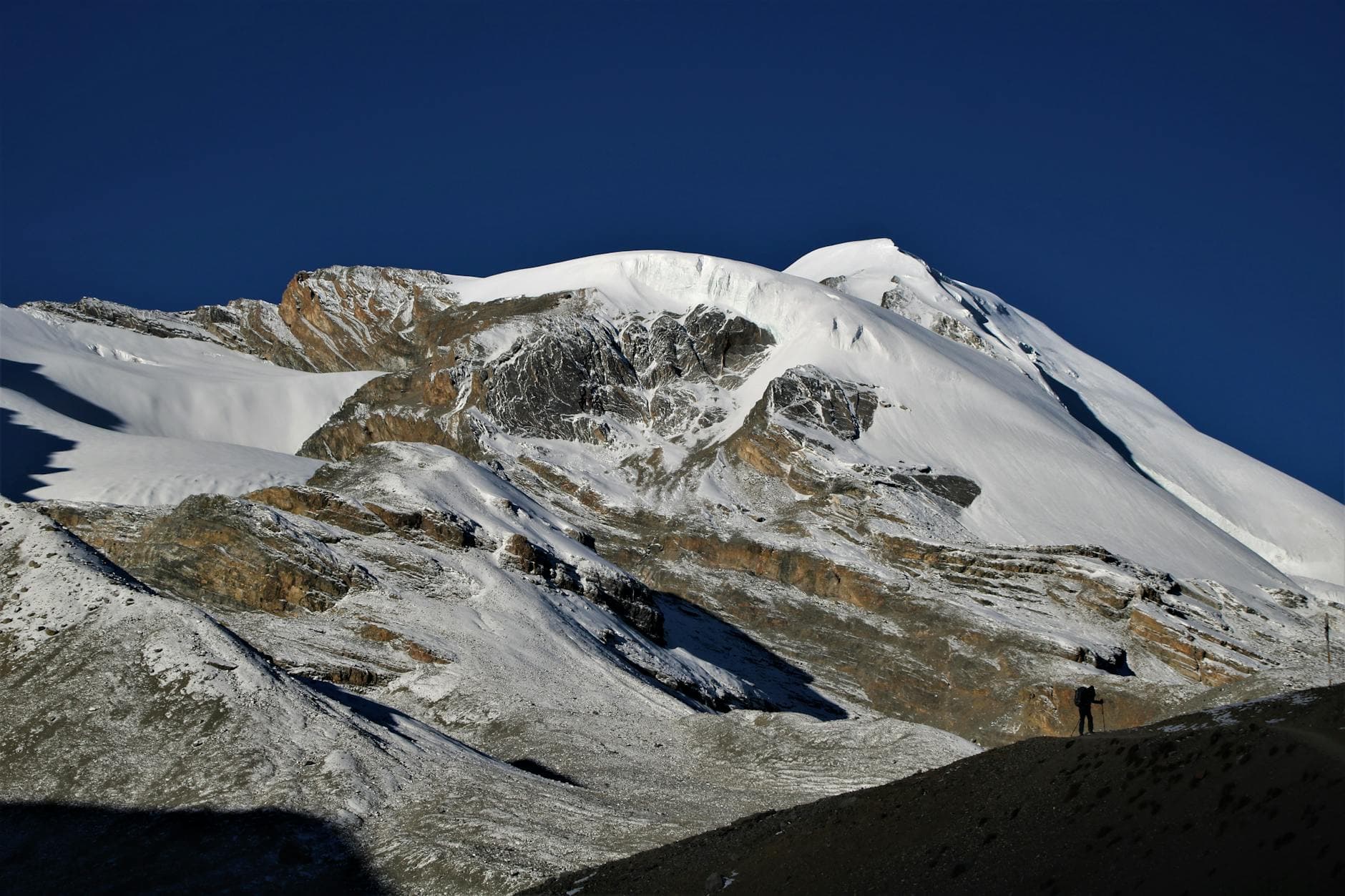
Trek Yak Kharka → Thorong Phedi (4,600 m)
▲ 4,600 m
Short but important acclimatization trek to the base of Thorong La. Early sleep essential.
Overnight: Thorong Phedi
Cross Thorong La Pass (5,416 m); descend to Muktinath (3,800 m)
▲ 5,416 m
A pre-dawn 3 am start for the highest point of the circuit. The pass crossing takes 5–7 hours — gruelling but euphoric. Descent to sacred Muktinath Temple.
Overnight: Muktinath
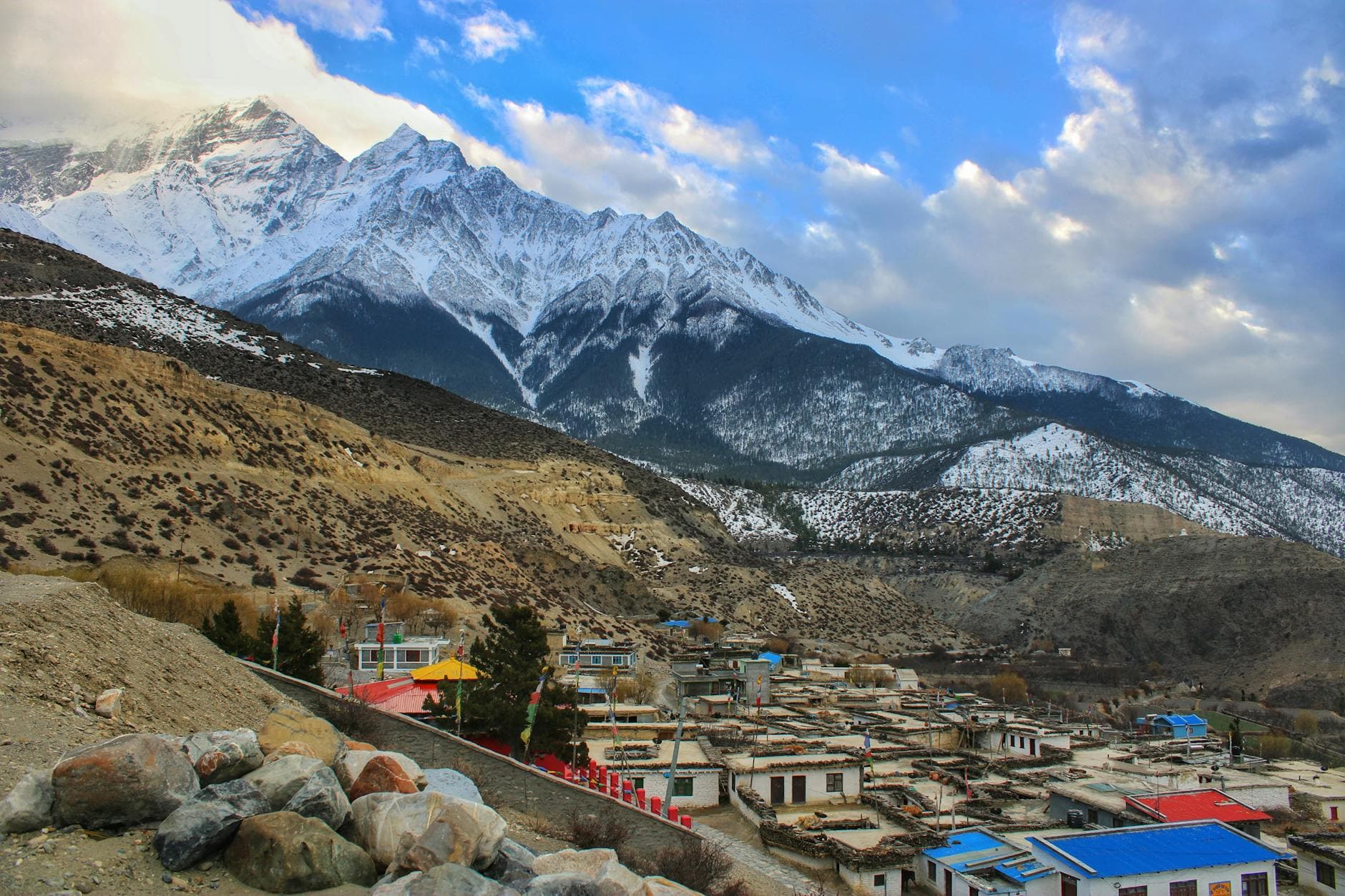
Trek Muktinath → Marpha via Jomsom (2,670 m)
▲ 2,670 m
Down the dramatic Kali Gandaki gorge — the world's deepest — to the apple orchards of Marpha.
Overnight: Jomsom area
Trek → Ghasa (2,010 m)
▲ 2,010 m
A steady descent down the Kali Gandaki into Ghasa, the first Thakali village, where pine gives way to oak and the air turns noticeably warmer. 5–6 hrs.
Overnight: Ghasa
Trek Ghasa → Tatopani (1,200 m)
▲ 1,200 m
Descend into sub-tropical warmth and relax in Tatopani's famous natural hot springs.
Overnight: Tatopani
Trek Tatopani → Ghorepani (2,850 m)
▲ 2,850 m
A steep climb through dense rhododendron forest, stunning in March–April when in full bloom.
Overnight: Ghorepani
Hike Poon Hill (3,210 m); trek to Nayapul; drive to Pokhara
▲ 3,210 m
Pre-dawn hike to Poon Hill for a golden Annapurna sunrise, then descend all the way to Nayapul for the drive to Pokhara.
Overnight: Pokhara
Drive Pokhara → Kathmandu
A scenic morning drive along the Trishuli river back to Kathmandu (or an optional 25-minute flight). Afternoon free to rest or shop in Thamel. 6–7 hrs by road.
Overnight: Kathmandu
Departure
Gallery
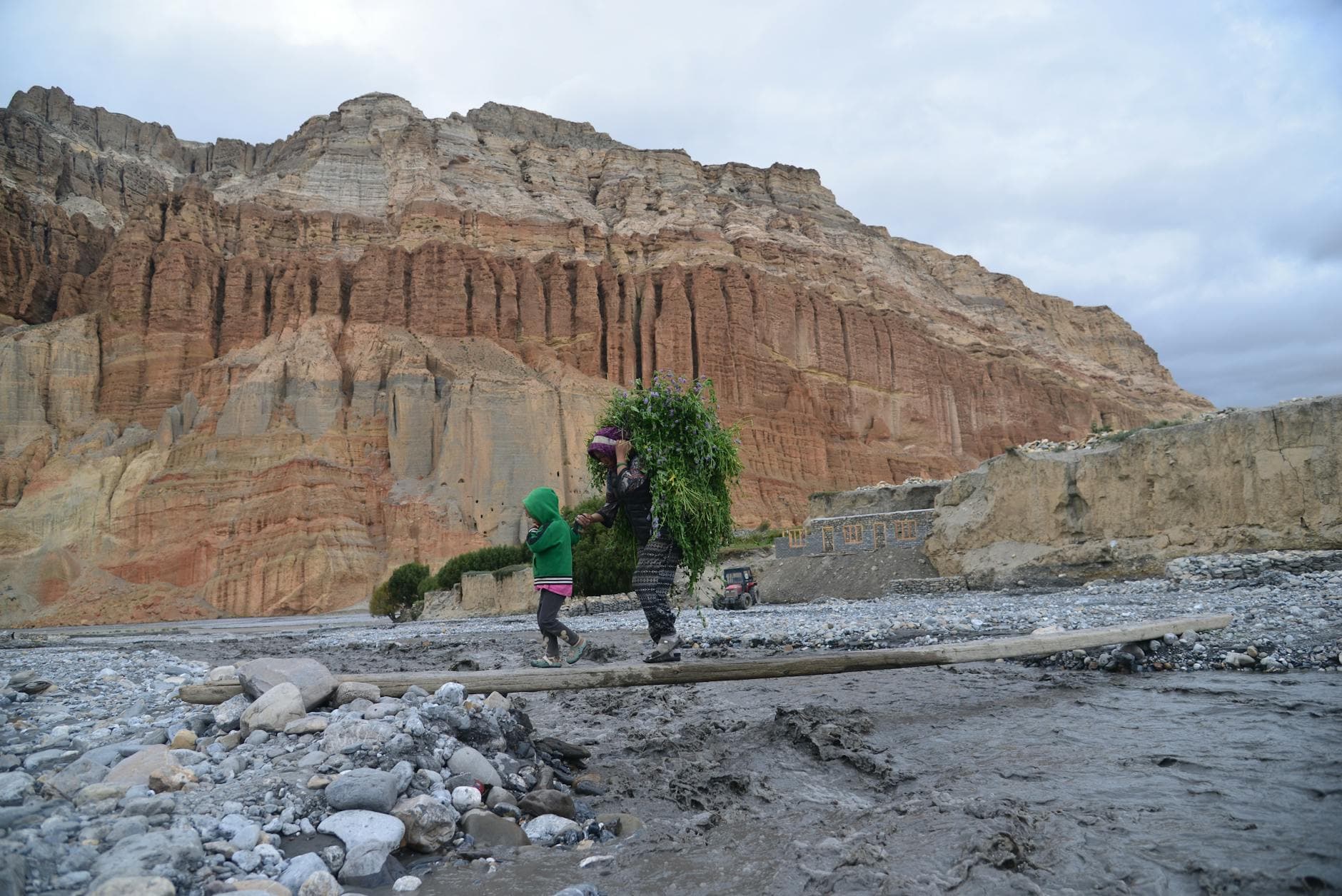
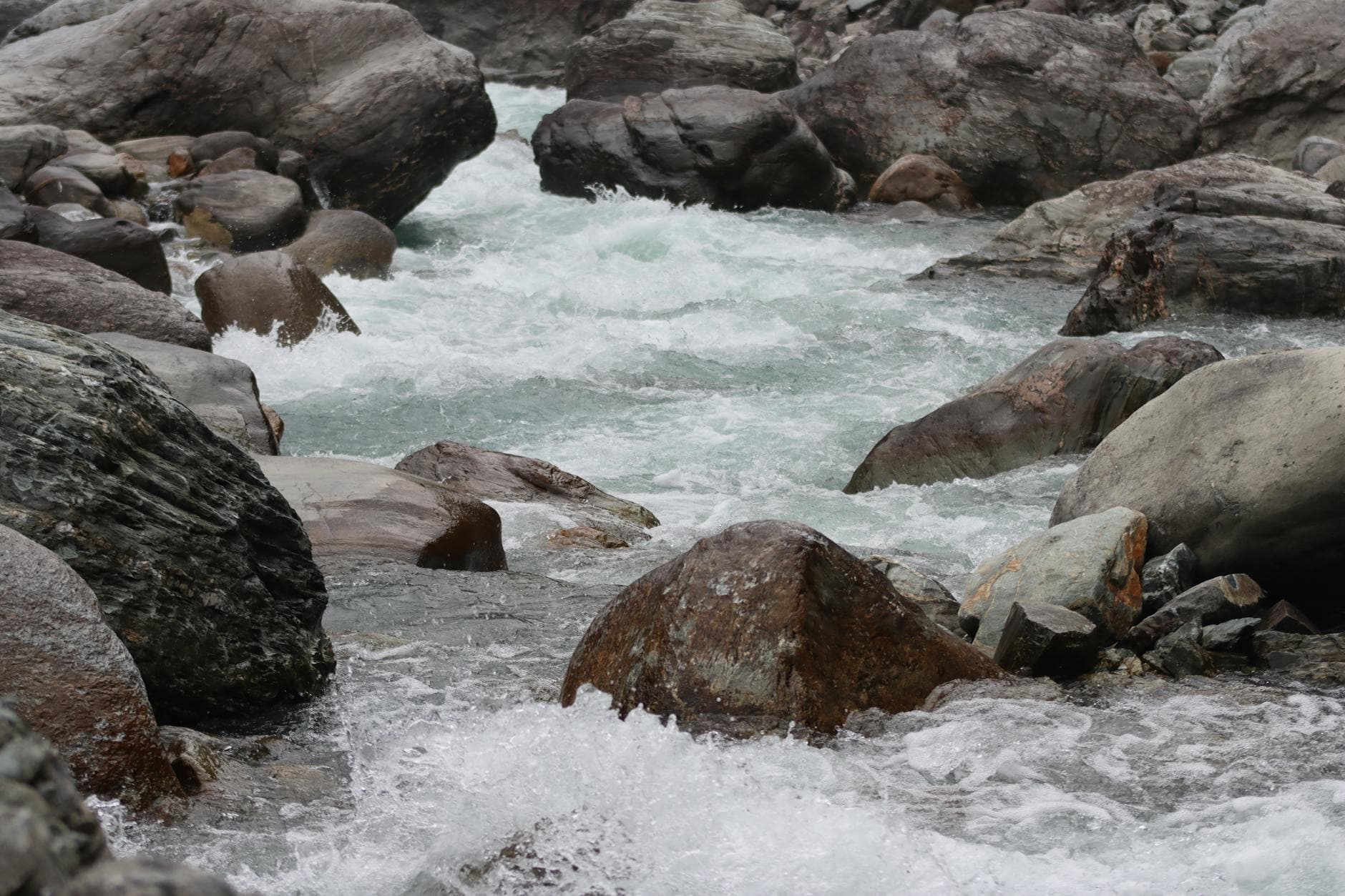
Moments from the route
Route
Route Map
Route and durations are approximate and can be customised to your schedule.
Included
What's Included
Exclusions
Not Included
Before You Go
Important Notes
- Permits: ACAP (Annapurna Conservation Area Permit) + TIMS — arranged by TempleFront.
- Best seasons: March–May and October–November.
- High winds on the Kali Gandaki gorge section (south of Muktinath) are normal — afternoon walking is not advisable there.
- Thorong La crossing starts at 3 am — ensure trekkers are properly rested and acclimatised at Manang.
- Comprehensive travel insurance covering trekking to 5,500 m and emergency helicopter evacuation is mandatory.
- Fitness: this is a long, demanding trek — be able to walk 6–7 hours a day for up to 12 consecutive days, including one very long pass day. We recommend cardio and hill training 2–3 months ahead.
- Acclimatisation: the rest day at Manang (3,540 m) is built in. Ascend slowly above it, drink plenty of water, and tell your guide of any headache, nausea or dizziness at once.
- Packing: layers for a 760 m–5,416 m range, a sleeping bag rated to −10°C, broken-in boots, trekking poles, sun protection, and a windproof shell for the pass.
- Connectivity & money: NCELL signal and teahouse Wi-Fi reach Manang and much of the lower trail. Carry cash in rupees — reliable ATMs end at Besisahar and Jomsom, and teahouses are cash-only.
- Cultural etiquette: Manang and Muktinath are devout Buddhist and Hindu areas — walk clockwise around shrines and chortens, dress modestly, and ask before photographing people.
Frequently Asked
Frequently Asked Questions
Is this a private trek?
Yes — every TempleFront trek is guided exclusively for your group. We never combine you with other trekkers.
What is included in the price?
All required permits, a licensed English-speaking guide, porters, teahouse accommodation, and breakfast and dinner throughout. Lunches are on your own account at teahouses en route.
Is the Annapurna Circuit still worth doing with the road?
Yes — the jeep road has shortened some sections but the classic trail still offers magnificent trekking, especially Manang valley, the Thorong La crossing, Muktinath, and the Tatopani hot springs. Our route stays on the trail wherever possible, avoiding the road.
How difficult is Thorong La Pass?
Thorong La (5,416 m) is a demanding 5–7 hour crossing starting at 3 am. No technical skills are required but good altitude acclimatisation is essential — the mandatory rest day at Manang (3,540 m) is non-negotiable. Your guide carries an emergency kit.
What about altitude sickness?
The circuit climbs gradually from 760 m to 5,416 m over 12 days, with an acclimatisation day at Manang. This is a well-tested schedule. Consult your doctor about altitude medication. Report any symptoms to your guide immediately.
What gear do I need?
Sturdy trekking boots, warm clothing for Thorong La (layers, down jacket, gloves, hat), trekking poles, a sleeping bag rated to -10°C, waterproof shell, and sun protection. A full kit list is provided on booking.
What are the teahouses like?
Excellent on the lower section, basic but adequate above Manang. Twin rooms with shared facilities; communal dining rooms. Your sleeping bag is essential above 3,500 m.
How do I confirm a booking?
Send us a WhatsApp or email enquiry. We respond same day with a detailed quote. A deposit secures your dates.
Keep exploring
Travellers who like this also explore
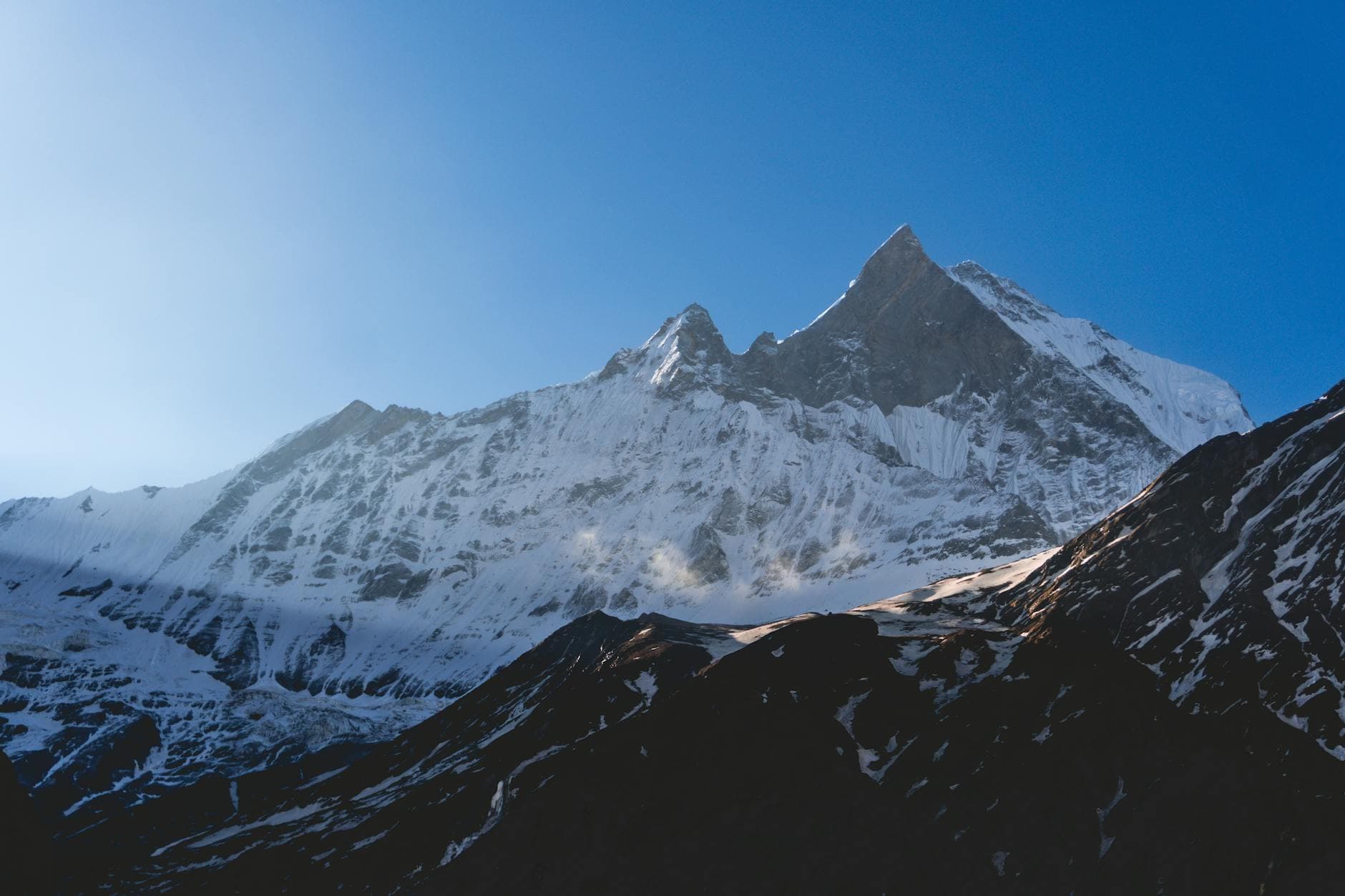
Annapurna Base Camp Trek
Into the Annapurna Sanctuary — a glacial amphitheatre ringed by ten peaks over 6,000 m.
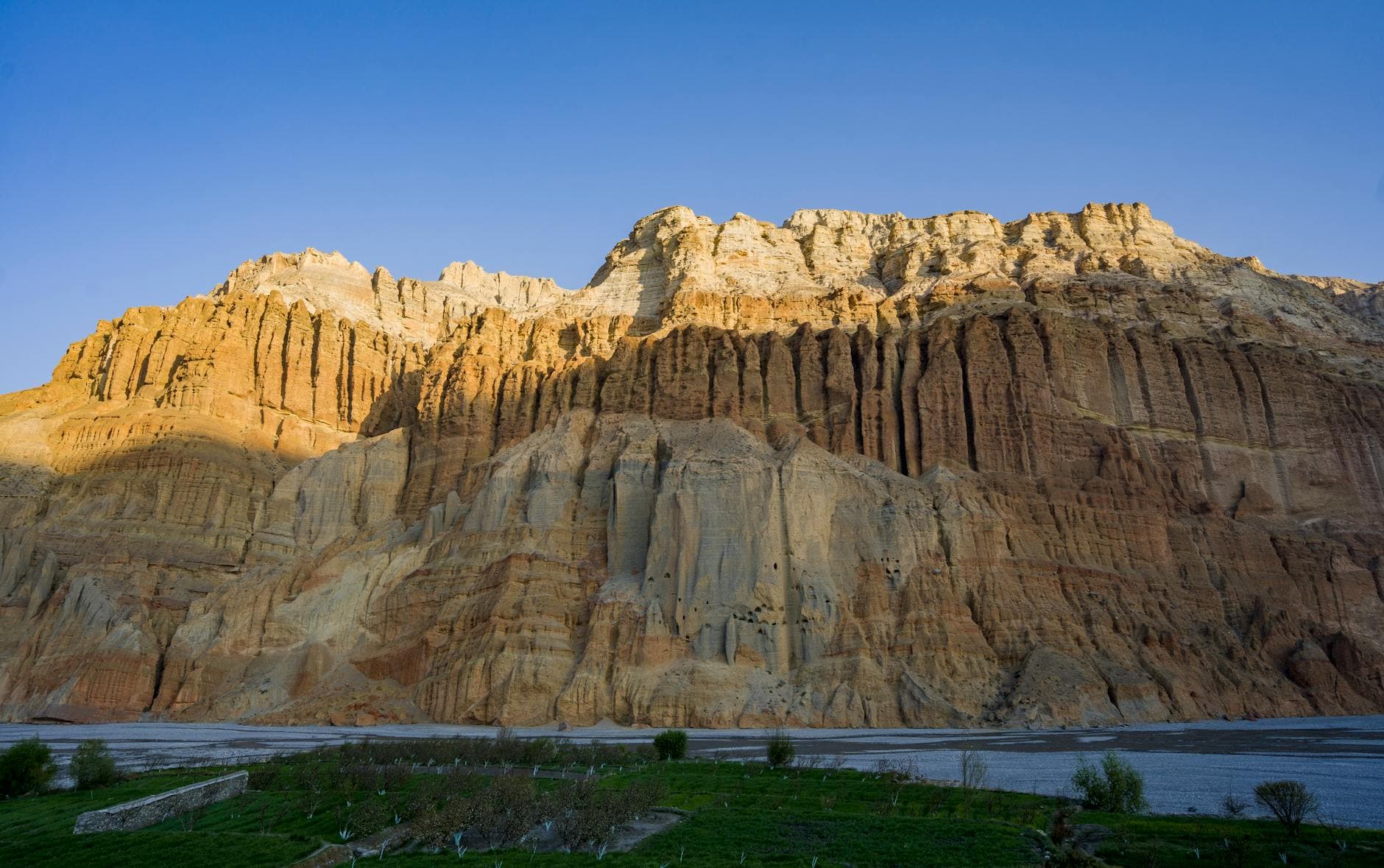
Upper Mustang Trek
Tibet's lost kingdom — a restricted desert landscape of ancient monasteries and the walled city of Lo Manthang.
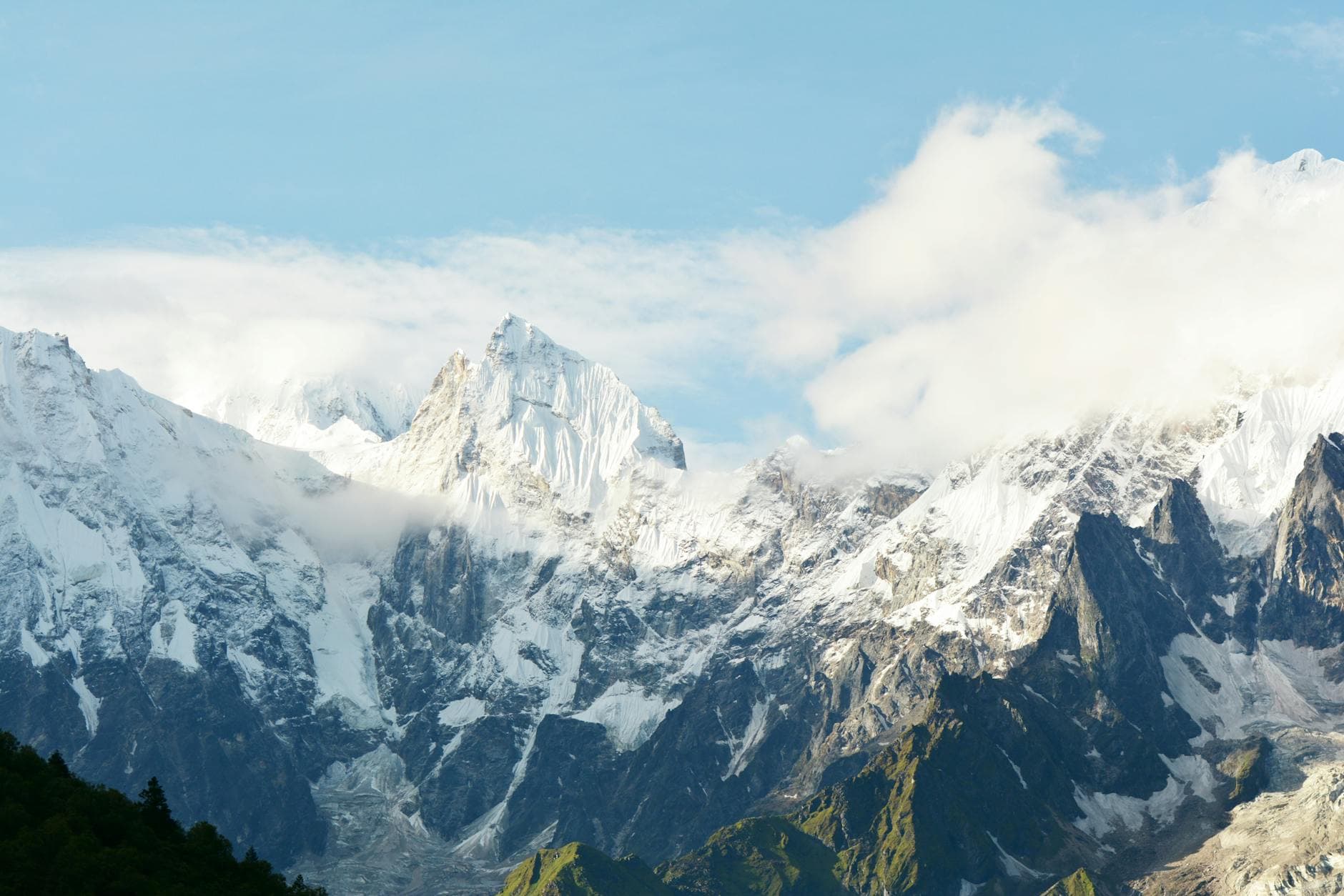
Everest Three Pass Trek
Cross three high passes — Kongma La, Cho La, and Renjo La — in the ultimate Khumbu circuit.
Ready?
Ready to plan your trip?
Every tour is private and fully customisable. Drop us a message and we'll build the perfect itinerary for your group.