In 30 years of sending trekkers to Base Camp, we've seen every season — the October crowds, the April wildflowers, the December solitude, and the monsoon mistakes. People write to us asking for the single "best" month, and the honest answer is that it depends on what you're willing to trade. Crystal-clear mountain views or empty trails? Warmer days or fewer people? Let us walk you through the whole year the way we'd explain it to family around the kitchen table in Kathmandu.
The short answer
October and November are peak season — stable weather, the clearest views of the year, and the busiest trails. March, April and May are the strong alternative — warmer, rhododendrons in bloom lower down, slightly more afternoon cloud. December to February is possible but hard — bitterly cold, very quiet, some teahouses shut. June to September is the monsoon — clouds, rain, leeches in the forest below Namche, and the highest chance your Lukla flight simply doesn't go. If someone tells you the monsoon is fine for Everest Base Camp, be careful.
Month by month, honestly
January
Deep winter, and we'll be straight with you: we don't usually send groups in January. Not because it's impossible — experienced, well-equipped solo trekkers do it every year — but because the cold is serious and the margins are thin. Nights at Gorak Shep (5,164m) can drop well below −15°C, and Namche Bazaar (3,440m) sits around freezing even by day. The teahouses above Tengboche start closing for the season, and the families who stay keep only a few rooms heated around the dining-room stove. Snow on the trail above Dingboche is normal. If you're asking us "is January good for Base Camp?", the honest answer for most people is no. Insider tip: the reward for those who do go is the mountains almost entirely to themselves — but bring a sleeping bag rated far colder than you think you need, and budget extra buffer days for snow.
February
Still winter, but the back of it is breaking by month's end. Clear, sharp views and firmer, drier trails than the muddy shoulders of spring. Lukla flights are more reliable than in the deep cold snaps of January, though delays still happen. Crowds remain thin. Insider tip: late February is one of our quiet favourites — you get near-winter solitude with the first hint of the spring stability returning, without January's brutal cold.
March
Spring begins. Early March is still cold and quiet; by late March the rhododendron forests below Tengboche start to colour and the trails fill out. Days warm pleasantly at Namche, though high camps stay cold at night. This is a genuine sweet spot for travellers who want spring scenery without the October density. Insider tip: book early March for solitude, late March for the first blooms — you can't quite have both.
April
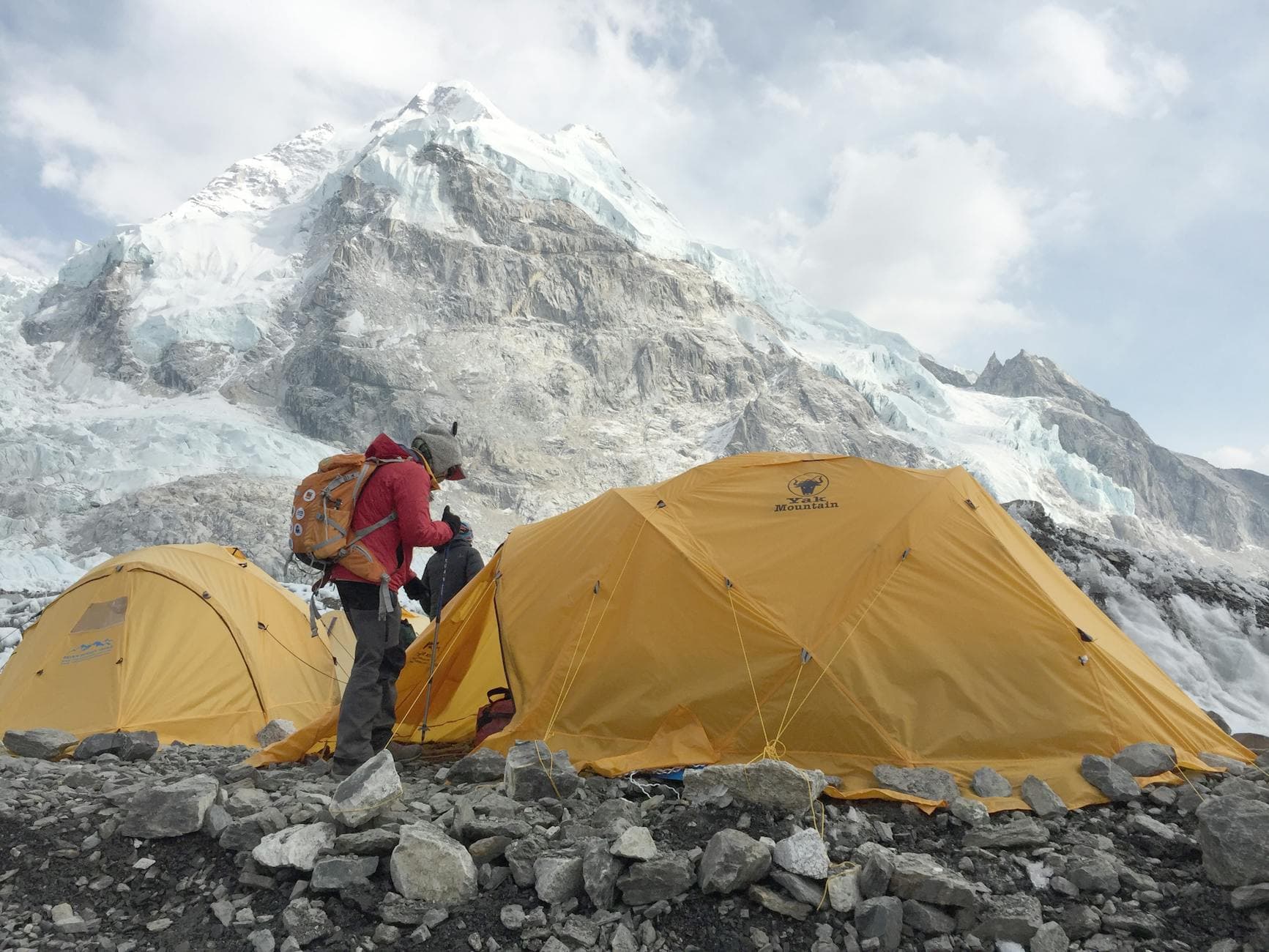
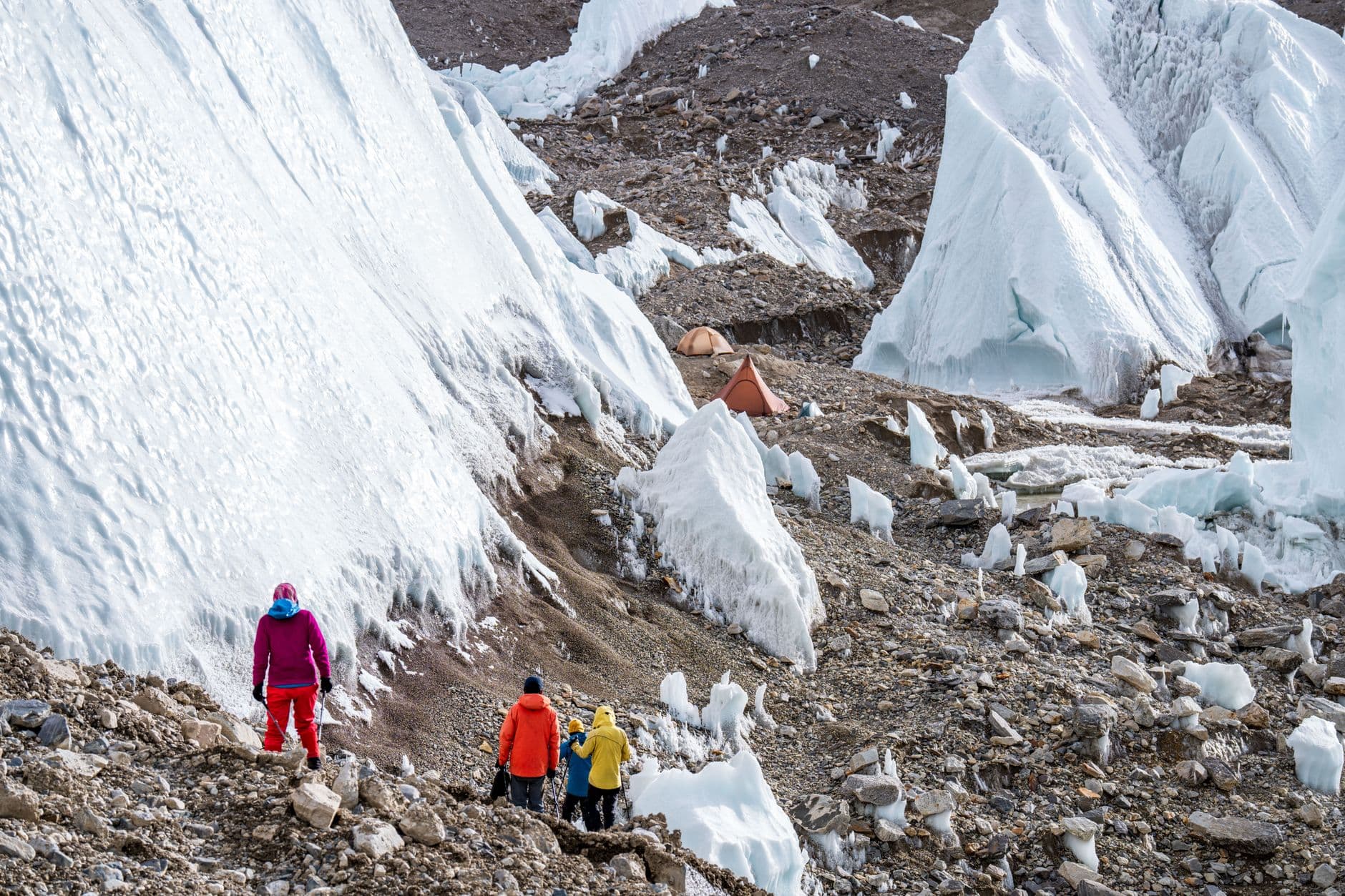
Our favourite spring month, and many trekkers' favourite overall. The rhododendrons are in full bloom through the lower Khumbu, the days are warm, and Base Camp itself is alive — this is when the Everest expedition teams move in, so the camp is a small tented city humming with energy, climbers, Sherpas and gear. Standing at Base Camp in April and watching the climbers prepare for the icefall is an experience the autumn trekkers never get. Afternoons can cloud over, so mornings give the best photographs. Trails are busy but not shoulder-to-shoulder. Insider tip: start walking by 7am to beat the afternoon cloud build-up over Ama Dablam — by mid-afternoon the peaks are often wrapped in cloud.
May
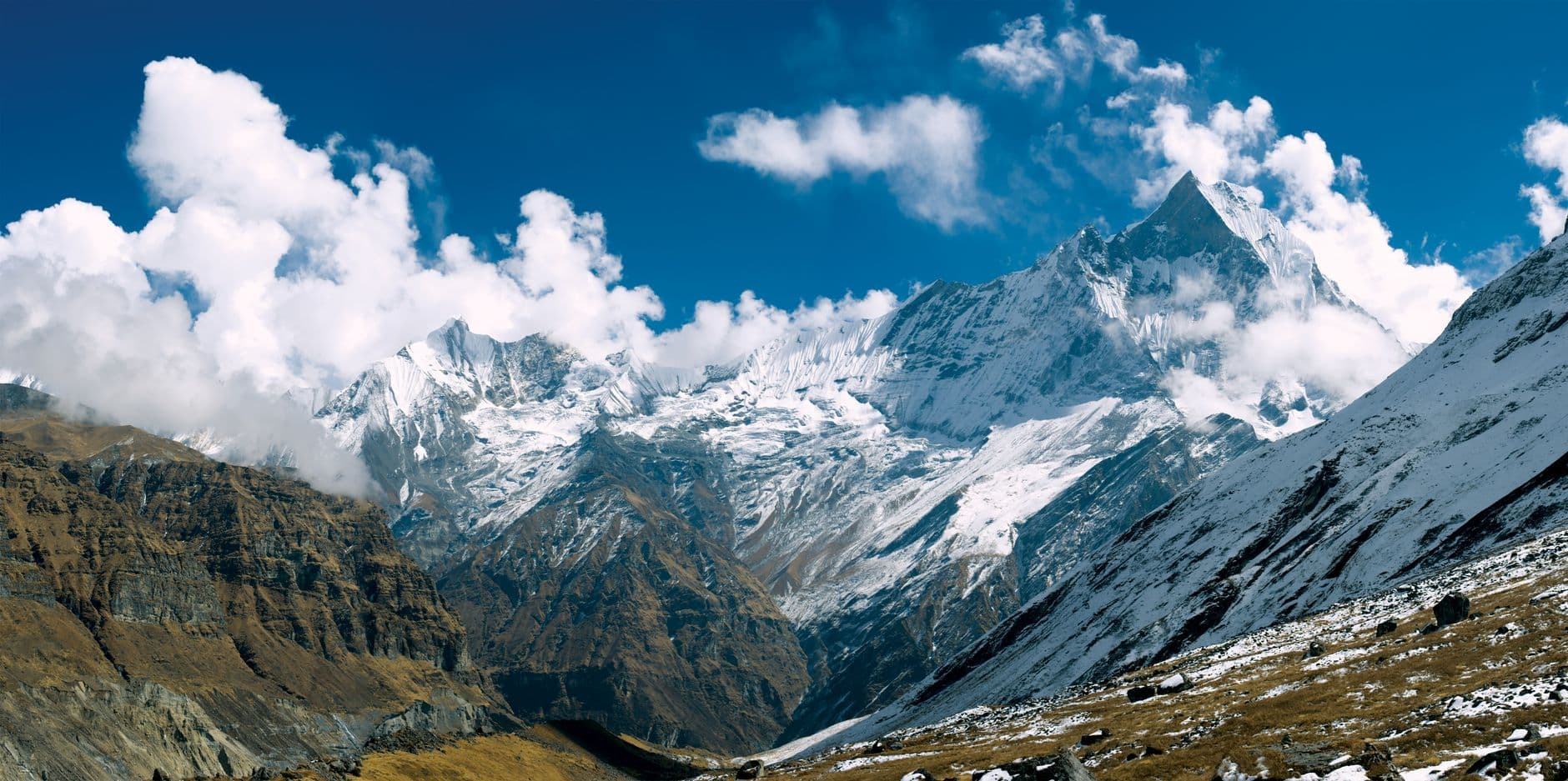
Late spring, warm and green, with the summit window for climbers arriving mid-to-late month. Views are good in the mornings but haze and afternoon cloud increase as the pre-monsoon humidity builds. The lower forests are lush. By late May you can feel the monsoon approaching. Insider tip: early May still treks beautifully; if you're booking late May, accept that some afternoons will be grey, and shoot your photos early.
June
The monsoon arrives, usually in the first half of the month. Lower trails get wet, leeches appear in the forest below Namche, and cloud hides the peaks for days at a time. Flights to Lukla become genuinely unreliable. We rarely recommend June for Base Camp. Insider tip: if June is your only window, consider the rain-shadow regions like Upper Mustang or Upper Dolpo instead — they stay dry behind the main Himalaya while the Khumbu drowns.
July & August
Full monsoon. Heavy cloud, frequent rain, slick trails, and the year's worst flight disruptions — it's common to lose two or three days waiting on weather at either end. The mountains do occasionally reveal themselves after a storm, freshly white and astonishing, but you cannot plan around it. Honestly, these are not Base Camp months. Insider tip: travellers set on Nepal in summer are far happier on a cultural tour of the Kathmandu Valley and Pokhara, or in the rain-shadow north.
September
The monsoon retreats through the month — early September is still wet, but by the last week the air washes clean and the autumn season opens with some of the freshest views of the year. Trails are green and uncrowded before the October rush. Insider tip: the last ten days of September are an underrated window — post-monsoon clarity, autumn stability arriving, and far fewer people than October.
October
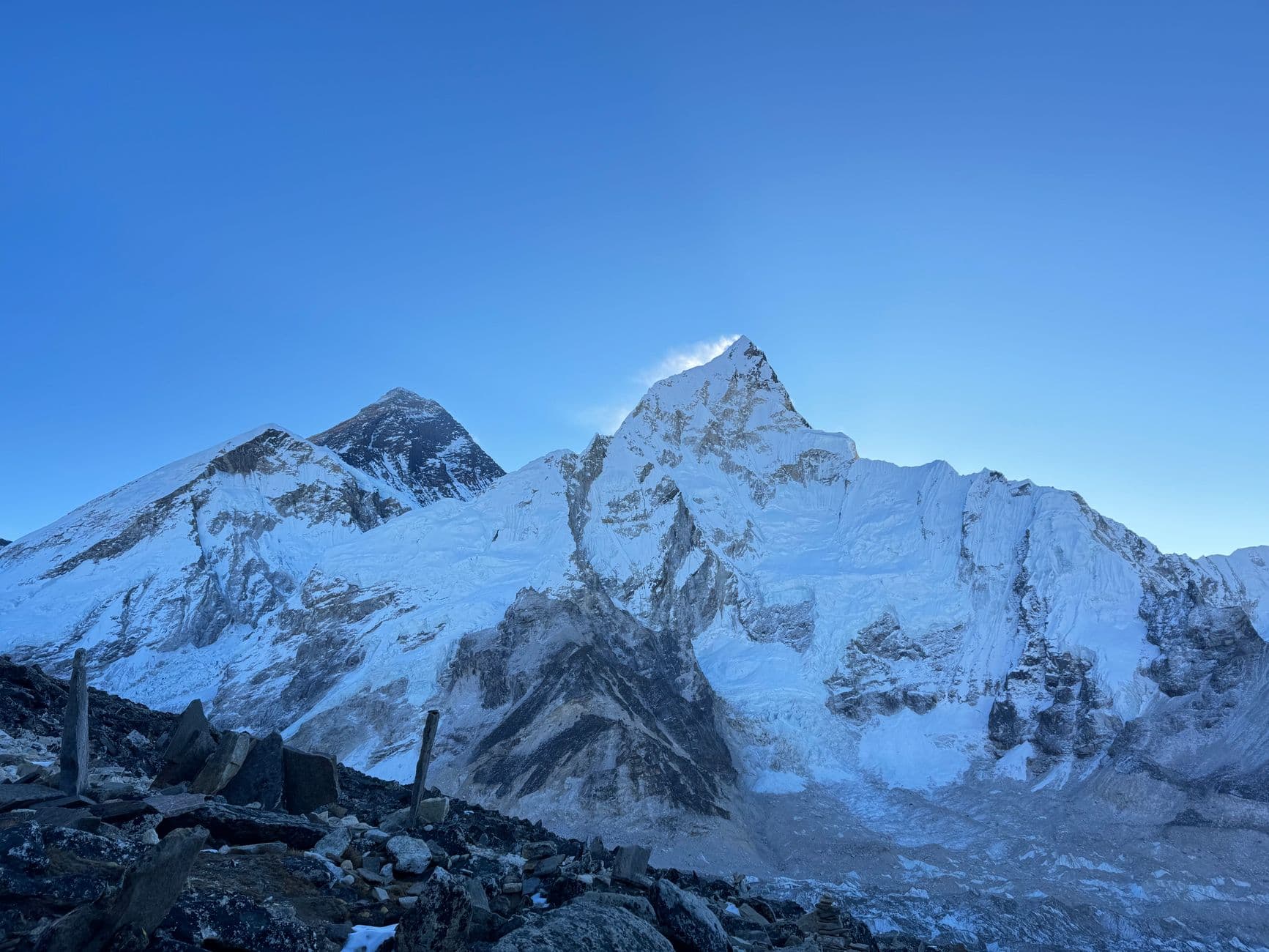
Peak season, and deservedly so. Stable high pressure, dry trails, comfortable daytime temperatures, and the clearest Everest views of the year. The price is people — and we won't soften it: October on the EBC trail is busy in a way that surprises first-timers. Namche feels like a small town rather than a mountain village, there can be a queue for the bakery at Tengboche, and at Gorak Shep the lodges are often fully booked by early afternoon, which is exactly why we reserve rooms well ahead. Is it still worth going in October? Absolutely — the weather and views are the best all year. But if crowds genuinely bother you, shift to late November or early March for the same mountains with a fraction of the people. Insider tip: travel mid-October rather than the first few days to dodge both the very peak of the crowds and the festival logistics crunch.
November
Arguably the best all-round month, and the one we recommend most often to first-timers who want everything. The post-monsoon clarity holds, the air is crisp and dry, and the crowds thin noticeably after the first week as the season winds down. Nights turn colder as the month goes on, especially up high. Insider tip: late November gives you October's views with a fraction of October's crowds — our single most-recommended window for people who want the full experience without the traffic jam.
December
Early winter. Often startlingly clear and beautifully quiet, but cold sets in hard, particularly at night above Dingboche. Some high teahouses begin to close for the season. The trails are yours. Insider tip: December suits the trekker who values solitude over comfort and packs properly for the cold — the reward is Base Camp without the queues, under some of the sharpest skies of the year.
The Lukla flight — the thing nobody puts in the brochure
Here is what we tell every single Base Camp client, because it's the part that ruins more trips than altitude or weather combined: Lukla flights cancel, and they cancel a lot. Lukla's airstrip sits at 2,860m, a 460-metre runway carved into the side of a mountain, with high terrain at one end and a sheer drop at the other. Planes only fly in clear conditions. If there's cloud in the valley — at Lukla, at Kathmandu, or anywhere on the route — nothing moves.
How bad it gets depends on the season. In peak October you might lose one or two days to weather across a whole trip; that's the good case. November gets less reliable as the month goes on. From December through February you might wait three or four days at either end, and we've seen the worst spells strand trekkers who hadn't built in any buffer. Two things follow from this, and they're not negotiable in our planning. First, build at least two buffer days into your itinerary — ideally one at each end. One is not enough. Second, never book your international flight home for the evening you're due back in Kathmandu. We tell clients to put their flight out at least two days after the scheduled trek end, and three is better. The trekkers who ignore this are the ones who end up sleeping on the floor at Lukla airport, or paying USD 400-plus a head for an emergency helicopter out, or simply missing their flight home.
One more thing that surprises people: in the peak seasons (October–November and April–May), domestic flights to Lukla usually don't leave from Kathmandu at all. They depart from Ramechhap (Manthali), a four-to-five-hour drive east of the capital, which means a very early — often pre-dawn — road transfer before you even reach the plane. It's not a problem if you know it's coming; it's a horrible surprise at 2am if you don't. Ask your operator which airport you're flying from before you finalise anything.
Crowds, festivals and the things that move under your feet
The honest truth about crowds
We've said it month by month, but it's worth saying plainly: the trail to Base Camp in peak October is genuinely crowded, and no operator's marketing photo will show you that. If solitude is part of why you're going to the Himalaya, October may quietly disappoint you. The fix is simple and costs you nothing but a calendar shift — go in late November or early March and you'll walk the same trail past the same mountains with eighty percent fewer people. You trade a little warmth (late November) or a few rhododendrons (early March) for the quiet. For many trekkers that's the best trade on this whole page.
How festivals shift the ground under your trek
Dashain and Tihar, Nepal's biggest festivals, fall in the September–October window (the exact dates move with the lunar calendar each year). They're a wonderful time to be in the country, but they also pull guides, porters and lodge staff home to their villages, and they put real pressure on domestic transport and city services for about a week. Our own Kathmandu team are with their families during Dashain, and we plan around it every year. It is not a reason to avoid October — if your trek starts mid-October you'll often be out on the trail during the festival, and your Sherpa crew will celebrate it with you, which is a lovely thing to witness. It is a reason to book early and travel with a team that has already planned for it.
Weather is meaningless if you rush
We say this to every client: the perfect month won't save you if you climb too fast. Altitude sickness doesn't care that the sky is blue. A proper Base Camp itinerary is 12 to 14 days with acclimatisation days at Namche and Dingboche built in — not because we want to sell you extra nights, but because that pacing is what keeps people safe and walking to the end. If a quoted itinerary looks suspiciously short for its altitude, that's your warning sign, in any season.
Photographers, plan for the light
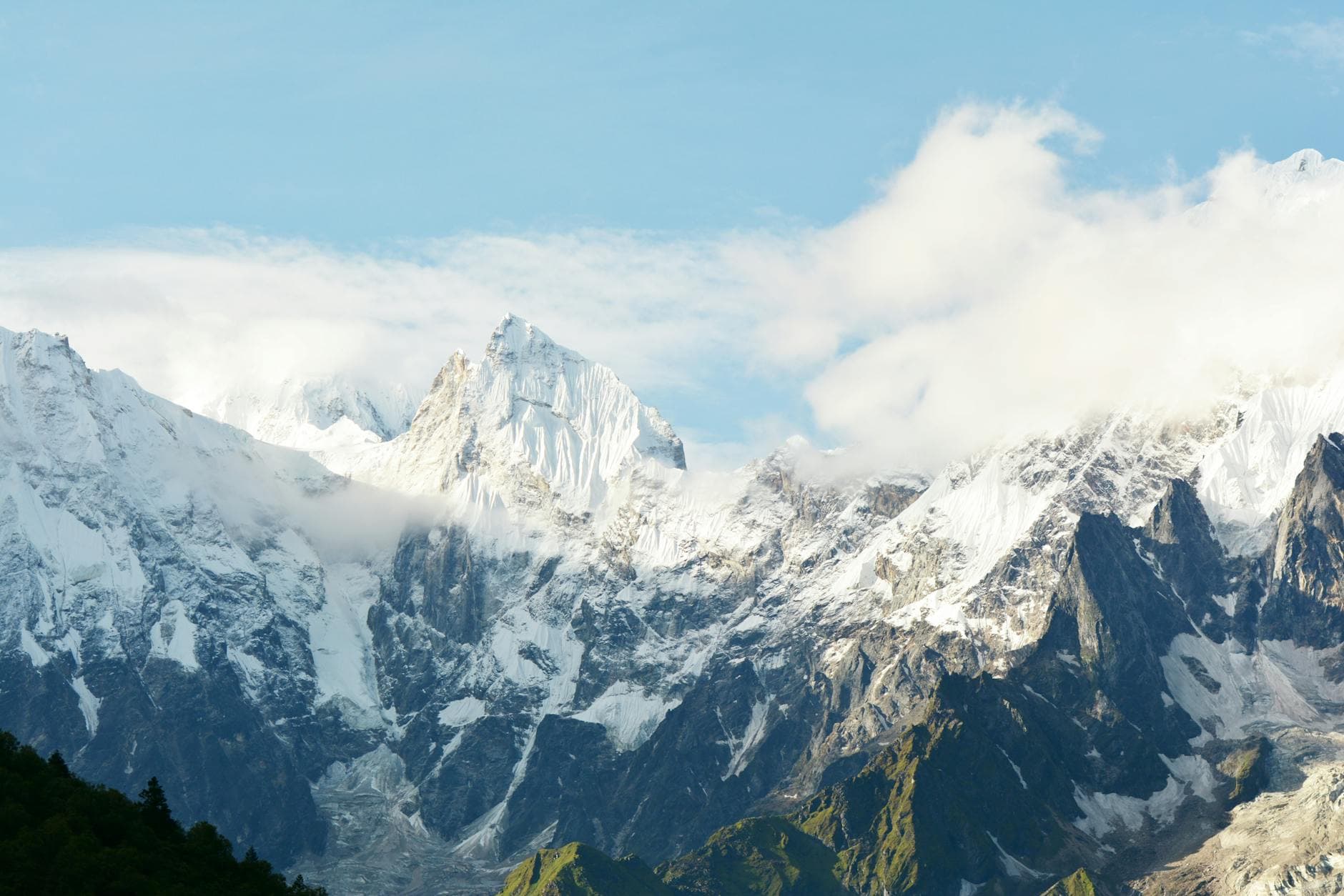
October and November give you the crystal-clear, sharp-edged summit views — the postcard Everest. April trades a little of that clarity for the colour of the rhododendron forests and the energy of the climbing season at Base Camp. In spring, shoot in the morning before the afternoon cloud builds; in autumn, you have clear light most of the day. Whichever season, the golden hour on Ama Dablam from around Tengboche is the shot people remember.
Our honest recommendation
After three decades of watching people come back glowing or come back frustrated, here is how we actually advise travellers:
- First-timers: late October or early November. The most reliable weather, the clearest views, and the reassurance of a busy, well-supported trail.
- Budget and shoulder-season travellers: early March or late November. Nearly the same views, noticeably fewer people, and easier room availability.
- Photographers: April for the rhododendron forests and the living Base Camp, October for the sharpest summit views.
- Solitude seekers: December or early March — cold, demanding, and gloriously empty.
- Anyone considering June–September: choose a different trek or a different region. The monsoon is not the time for Everest Base Camp.
The mountain is there all year. The art is choosing the season that matches the trek you actually want — and giving yourself the days to walk it safely.
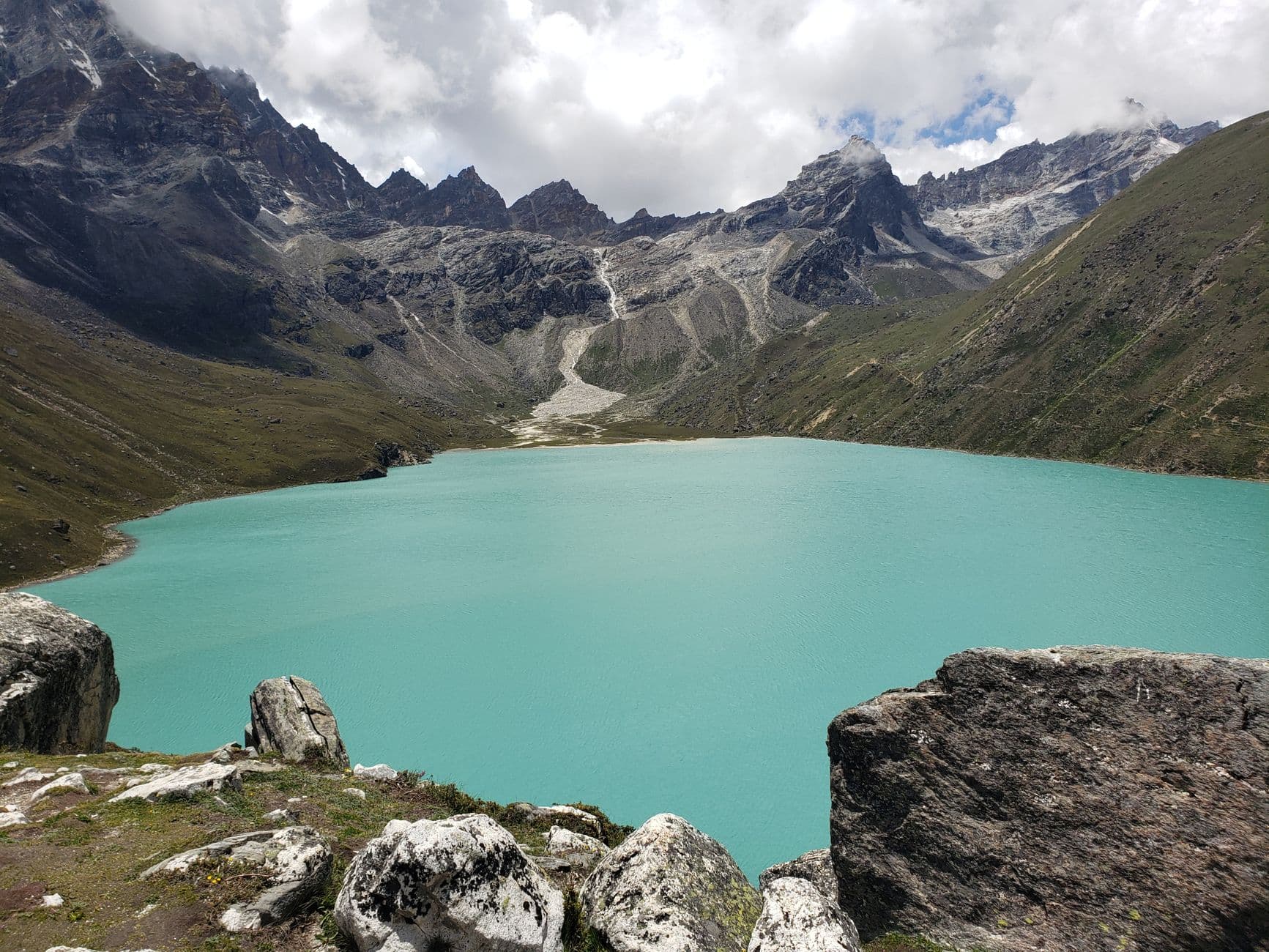
If you'd like the longer, quieter version of the Khumbu, the Gokyo Lakes route trades some of the Base Camp crowds for turquoise glacial lakes and the view from Gokyo Ri. And if you're a seasoned trekker chasing the full high-mountain circuit, the Everest Three Pass trek is the most complete way to see the region. Whichever you choose, the season advice above holds.
Planning your Everest Base Camp trek and still unsure of the dates? Tell our Concierge what matters most to you — clear views, small crowds, warm days, or the lowest price — and we'll help you pick the window that fits. We've walked all of them.